
Join us for our inaugural year of Spring Learning! This reimagined event will help our community connect, learn, and grow as leaders. Spring Learning will be hosted in-person at 4 locations geographically placed throughout the United States in 2026. One virtual Spring Learning will also be hosted. While the primary audience for Spring Learning is undergraduate students, there will also be dedicated tracks for professionals and graduate students.
NODA is offering five Spring Learning conferences to choose from in 2026:
|
February 20-22, 2026 |
University of California Irvine |
|
March 6-8, 2026 |
University of Minnesota Twin Cities (at The Graduate hotel) – CANCELED |
|
March 13-15, 2026 |
University of South Florida |
|
March 20-22, 2026 |
Towson University |
|
April 24-25, 2026 |
Virtual |
***Individuals may attend any conference location that is offered regardless of geographical location or place community.
Submission Timeline for All Locations
Wednesday, December 3, 2025: Ed Session Proposal Open
Wednesday, December 10, 2025: Registration for conferences opens & NEF Application Open
Monday, January 12, 2026: Ed Session Proposal Due
Friday, January 23, 2026: Ed Session Decisions Released
Monday, February 2, 2026: NEF Application Deadline
Call for Sessions is now Closed!
Ready to submit a session proposal and be a part of the inaugural year for Spring Learning? Click below! Applications closed January 12, 2026.
Submitting a program for a Spring Learning Conference is a quick and simple process. You don’t need to be an expert to be a conference presenter, just have a program or idea you would like to share with the NODA community. While undergraduate students are welcome (and encouraged) to present at a NODA Spring Learning Conference, we ask a professional or graduate student member be responsible for submitting the session proposal.
Submit a proposal for:
- Educational Session – Showcase current research, best practices, and/or professional techniques which advance the field of orientation, transition, and retention (OTR) or enhance our professional careers.
- Roundtable – Organized conversation with one or more moderators. Moderators provide a contextual overview to the topic and then facilitate dialogue between participants.
- Skills Based Sessions – Highlight the skills and tools that don’t always get to shine in the OTR arena. Skill based sessions are practical demonstrations of everyday skills OTR professionals may need.
To help guide your session development, each session should focus on a primary target audience, with the goal of achieving a predefined learning outcome or advancement in a core competency. Use the links below to learn more.
Call for Reviewers
Peer Reviewers bring diverse expertise to ensure that all submissions receive an equitable review. Reviewers will provide feedback for each proposal they review to assist the planning committees in the selection process. The time commitment to review is nominal, with reviews happening mid-January. To sign-up to be a reviewer is now closed.
Sample Draft Schedule
|
Friday |
Registration: 5:00 pm-7:00 pm |
|
Saturday |
8:30 am-10:00 pm program (including ed session blocks and keynote speakers) |
|
Sunday |
8:30 am-12:00 pm program (ed session blocks and closing) |
Registration is now open!
Click on the spring learning location you are interested in attending to learn more and to register!
Registration Rate (per person)
|
Early Bird |
Regular |
Late |
|
|
Rate Ends 3 Weeks Before Conference |
Rate Ends 2 Weeks Before Conference |
Rate Ends 3 Days Before Conference |
|
|
Member Rate In-Person Conference |
$195 |
$220 |
$270 |
|
Non-Member Rate In-Person Conference |
$390 |
$415 |
$465 |
|
Member Rate Virtual Conference |
$95 |
$120 |
$170 |
|
Non-Member Rate Virtual Conference |
$190 |
$215 |
$265 |
2026 NODA Spring Learning Q&A Recording
THANK YOU TO THE 2026 NODA SPRING LEARNING SPONSORS

Exclusive preview
2027 Spring Learning Locations
Spring Learning Conferences will be hosted in person at four locations geographically placed throughout the United States, along with one virtual conference option. Participants are welcome to attend any location that best meets their needs or interests. While the primary audience for Spring Learning is undergraduate students, there will also be dedicated tracks for professionals and graduate students.
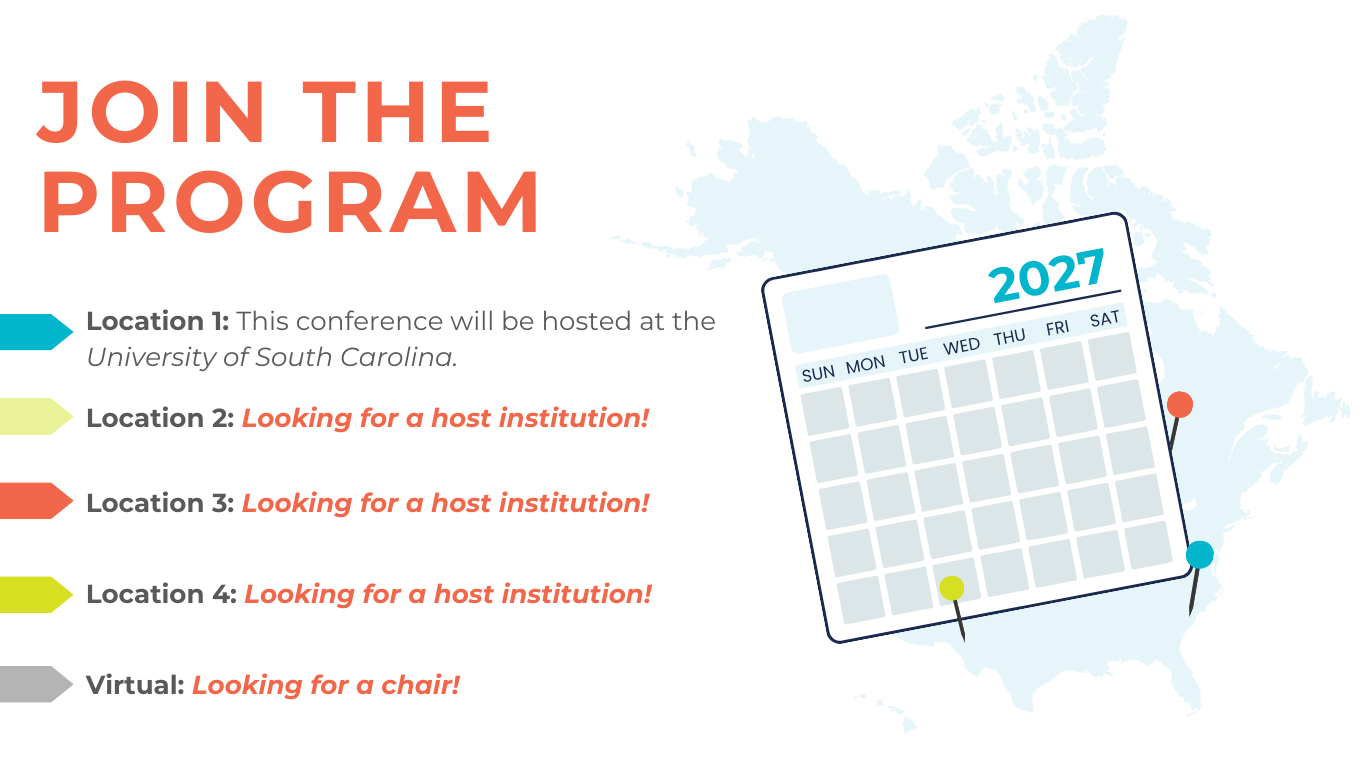
Location 1
Tennessee, North Carolina, South Carolina, Georgia, Mississippi, Alabama, Florida
Location 2
New Mexico, Texas, Oklahoma, Arkansas, Louisiana
Location 3
Wisconsin, Illinois, Michigan, Indiana, Ohio, Kentucky, and Ontario, Canada
Location 4
Maine, Connecticut, Massachusetts, New Hampshire, Rhode Island, Vermont, New Jersey, and New York; Quebec, New Brunswick, Nova Scotia, Prince Edward Island, Newfoundland and Labrador, Canada
Virtual
A virtual conference will be held on zoom.